
Where to Buy Thermal Intrusion Detection Systems for Critical Infrastructure in the US
Organizations responsible for protecting critical infrastructure face a unique challenge: securing large outdoor environments while maintaining reliable detection capabilities day and night, often in harsh and changing conditions.
As a result, thermal intrusion detection systems for critical infrastructure have become an increasingly important component of modern security strategies. From utility substations and solar farms to airports, ports, water treatment facilities, and data centers, thermal technologies help security teams detect potential threats before they reach sensitive assets.
For organizations researching where to buy thermal intrusion detection systems, the answer depends less on geography and more on selecting a solution that aligns with operational requirements, site conditions, and security objectives.
Whether your facility is located in the United States or elsewhere in the world, the same evaluation criteria generally apply.
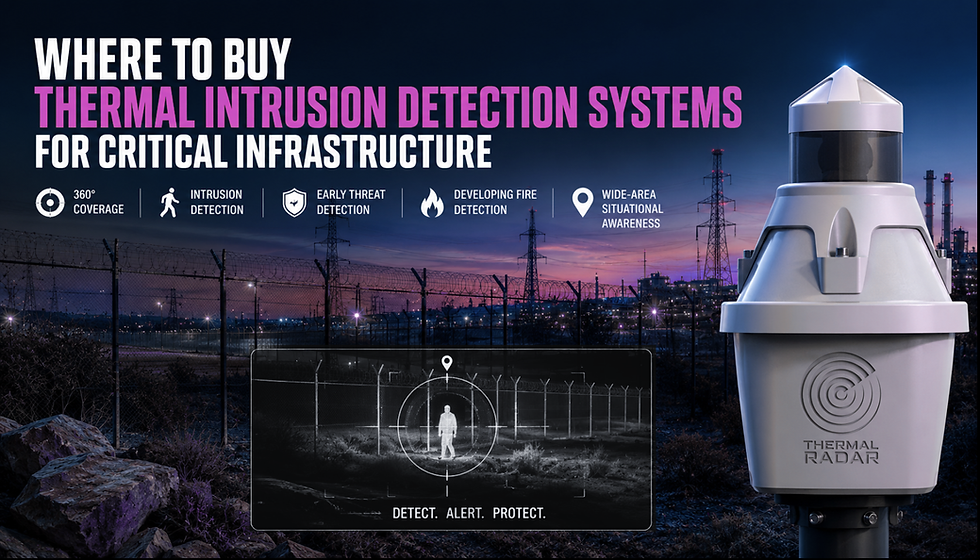
What Are Thermal Intrusion Detection Systems?
Thermal intrusion detection systems use thermal imaging technology to detect heat signatures generated by people, vehicles, equipment, fires, and other objects.
Unlike conventional visible-light cameras, thermal systems do not depend on ambient lighting. This allows them to operate effectively during darkness, changing weather conditions, and challenging outdoor environments.
Modern thermal intrusion detection systems often combine:
Thermal imaging
Intelligent analytics
Automated alerting
Geospatial awareness
Video management system integration
Visual verification capabilities
Incident reporting and tracking
These capabilities help organizations identify potential threats while improving overall situational awareness.
Why Critical Infrastructure Uses Thermal Intrusion Detection
Critical infrastructure sites frequently span large areas and operate continuously. Traditional security technologies may struggle to provide reliable coverage across expansive outdoor environments.
Thermal intrusion detection systems offer several advantages.
Continuous 24/7 Monitoring
Thermal imaging detects heat rather than visible light, allowing systems to monitor protected areas regardless of lighting conditions.
Earlier Threat Detection
Many organizations seek to identify potential intrusions before an individual or vehicle reaches critical assets. Early detection can provide security personnel with additional time to assess and respond to developing situations.
Reduced Environmental Limitations
Thermal systems are generally less affected by shadows, glare, headlights, and other lighting-related challenges that can impact conventional video surveillance.
Improved Situational Awareness
When combined with analytics and geospatial awareness, thermal systems help operators understand not only that a detection occurred, but also where it occurred and how it relates to the broader environment.
Protection of Large Outdoor Facilities
Critical infrastructure environments often include:
Utility substations
Solar farms
Battery energy storage systems (BESS)
Airports
Ports
Data centers
Water treatment facilities
Mining operations
Oil and gas facilities
Industrial manufacturing sites
Many of these facilities require security technologies capable of monitoring extensive outdoor areas efficiently.
Where to Buy Thermal Intrusion Detection Systems for Critical Infrastructure
Organizations typically purchase thermal intrusion detection systems through security integrators, authorized resellers, technology partners, or turnkey solution providers rather than sourcing and deploying the technology themselves.
Through Security Integrators
For most critical infrastructure projects, security integrators serve as the primary purchasing channel.
Integrators evaluate site requirements, design the overall security architecture, coordinate technology selection, and manage deployment. They often combine thermal detection technologies with video management systems, PTZ cameras, access control platforms, communications infrastructure, and monitoring capabilities to create a complete solution.
Working with an experienced integrator can help organizations:
Evaluate security requirements
Design layered detection strategies
Integrate with existing security systems
Simplify procurement and installation
Reduce deployment risk
Ensure long-term support and maintenance
For utilities, energy providers, transportation facilities, industrial sites, and other critical infrastructure environments, integrators are frequently the first point of contact when evaluating thermal intrusion detection solutions.
Through Authorized Resellers and Technology Partners
Many thermal surveillance technologies are available through authorized resellers, distributors, and regional technology partners.
These organizations often provide local expertise and can assist with:
Product demonstrations
Budgetary planning
Technical consultation
Solution recommendations
Procurement assistance
Training and support
For organizations seeking guidance during the evaluation process, authorized partners can help identify solutions that align with operational requirements and project objectives.
Through Turnkey Security Solution Providers
Some organizations prefer to work with providers that deliver a complete security solution rather than individual components.
These providers may combine thermal detection technologies, analytics, communications, power systems, monitoring capabilities, and operational services into a unified deployment.
This approach can be particularly beneficial for remote, distributed, or large-scale critical infrastructure environments where simplicity, rapid deployment, and long-term operational support are important considerations.
Direct From Manufacturers
In some cases, organizations may engage directly with manufacturers during the evaluation or planning phase, particularly for large enterprise deployments or highly specialized applications.
Manufacturers can often provide technical expertise, engineering guidance, and product-specific recommendations. However, deployment, integration, and ongoing support are frequently performed through authorized partners and security integrators who understand the unique requirements of the site and the broader security ecosystem.
What to Look for Before Purchasing
Not all thermal intrusion detection systems are designed to solve the same problems.
Organizations should evaluate solutions based on operational requirements rather than simply comparing individual device specifications.
Detection Range
How far away must a person or vehicle be detected? Detection requirements often vary significantly between facilities.
Coverage Requirements
Large outdoor environments may require technologies capable of monitoring broad areas without excessive infrastructure.
Analytics Capabilities
Advanced analytics can help reduce nuisance alarms while improving detection performance.
Situational Awareness
Detection alone is not always sufficient.
Many organizations benefit from systems that provide additional context regarding target location, movement, and proximity to critical assets.
Integration Flexibility
Organizations should evaluate compatibility with:
Video management systems
PTZ cameras
Access control platforms
Alarm monitoring systems
Security operations centers
Total Cost of Ownership
Long-term value often extends beyond initial hardware costs.
Important considerations include:
Infrastructure requirements
Maintenance needs
Licensing costs
Scalability
Operational efficiency
Why Organizations Are Moving Beyond Traditional Fixed Thermal Cameras
For years, many thermal security deployments relied on multiple fixed cameras positioned around a perimeter.
While this approach can be effective, it often requires substantial infrastructure, multiple devices, and careful management of overlapping fields of view.
As critical infrastructure environments continue to expand, many organizations are exploring technologies that provide broader situational awareness while reducing system complexity.
The focus is increasingly shifting from simply monitoring perimeter segments to understanding activity across the entire protected environment.
This evolution has led to growing interest in solutions that combine thermal detection, analytics, automated alerting, geospatial awareness, and visual verification into a unified operating picture.
Thermal Radar™ and Modern Critical Infrastructure Protection
Thermal Radar™ was developed specifically to address many of the challenges associated with protecting large outdoor environments.
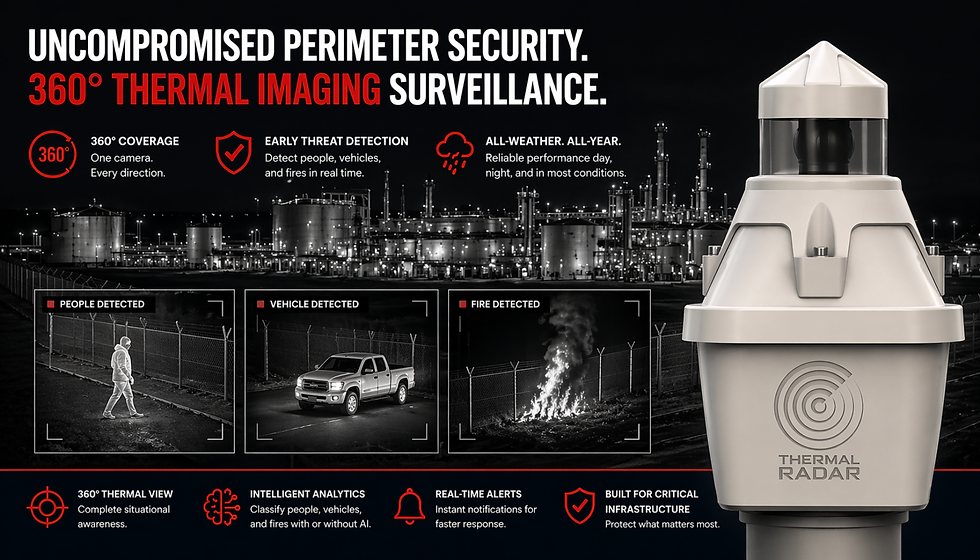
Rather than relying solely on fixed thermal cameras, Thermal Radar™ utilizes patented 360-degree thermal surveillance technology designed to continuously monitor areas beyond, at, and within a protected perimeter.
The platform helps organizations:
Detect intrusions (and fires) across large outdoor environments
Improve situational awareness
Reduce infrastructure requirements
Automate alerting and target tracking
Integrate with PTZ cameras for visual verification
Monitor multiple zones simultaneously
Thermal Radar™ is deployed across a wide range of critical infrastructure applications, including utilities, renewable energy sites, transportation facilities, industrial operations, and commercial environments.
In addition to intrusion detection, Thermal Radar™ can also support the detection of developing fire events through fireSENSE™, providing additional operational value for facilities where both security and fire awareness are important.
Frequently Asked Questions
Where can I buy thermal intrusion detection systems for critical infrastructure?
Organizations typically work with security integrators, authorized resellers, and technology partners to purchase thermal intrusion detection systems. These providers help match the appropriate technology to the site's operational requirements while supporting deployment, integration, training, and ongoing maintenance.
What industries use thermal intrusion detection systems?
Common applications include utilities, substations, solar farms, battery energy storage systems, airports, ports, water infrastructure, industrial facilities, mining operations, and data centers.
Can thermal intrusion detection systems detect intruders at night?
Yes. Thermal imaging detects heat signatures rather than visible light, allowing systems to operate effectively during complete darkness.
How do thermal intrusion detection systems reduce false alarms?
Thermal systems are generally less affected by lighting changes, shadows, glare, and other visual disturbances. Advanced analytics can further improve alarm accuracy.
Can one thermal system detect both intrusions and developing fire events?
Some advanced thermal surveillance solutions can support both intrusion detection and developing fire event detection, depending on system design and capabilities.
What is the best thermal intrusion detection system for large outdoor environments?
The best solution depends on site size, operational objectives, detection requirements, infrastructure availability, and integration needs. Organizations should evaluate systems based on overall situational awareness, scalability, and long-term operational value rather than focusing solely on individual device specifications.
About Thermal Radar™
Thermal Radar™ develops patented 360-degree thermal surveillance solutions designed to help organizations detect intrusions, improve situational awareness, and protect critical assets. Developed and manufactured in the United States, Thermal Radar™ supports critical infrastructure, energy, industrial, transportation, and commercial security applications throughout the United States and around the world.


Comments